Field learning, documentation and basic conservation in a coastal landscape
Where It Is
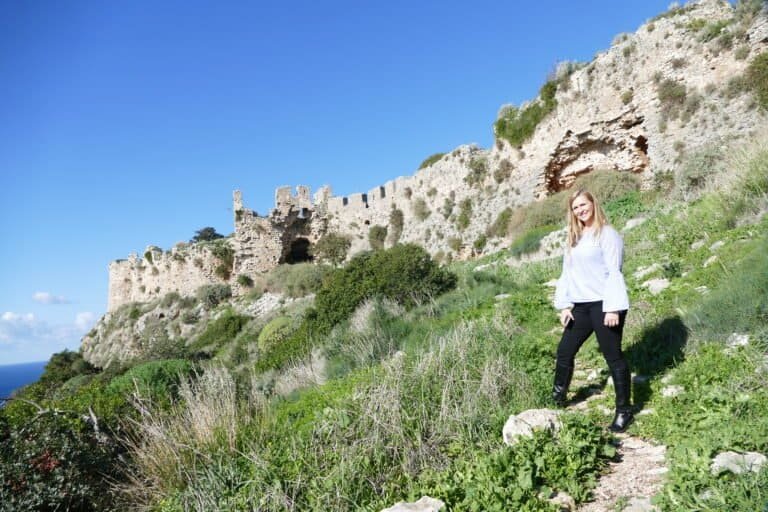
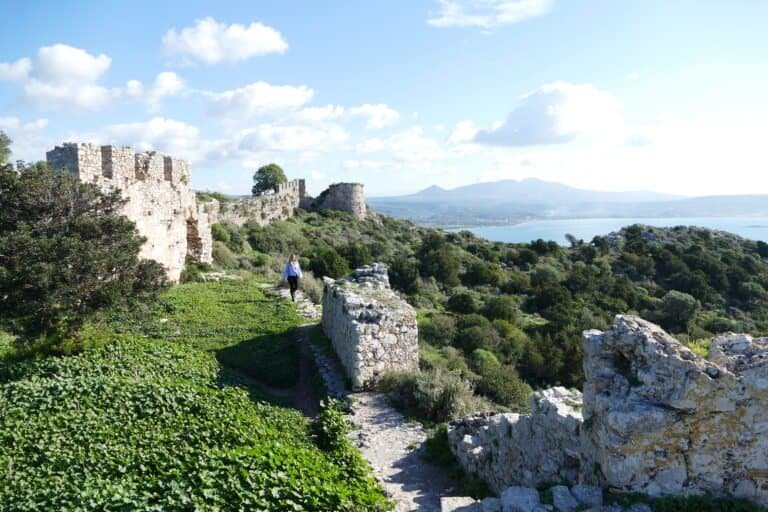
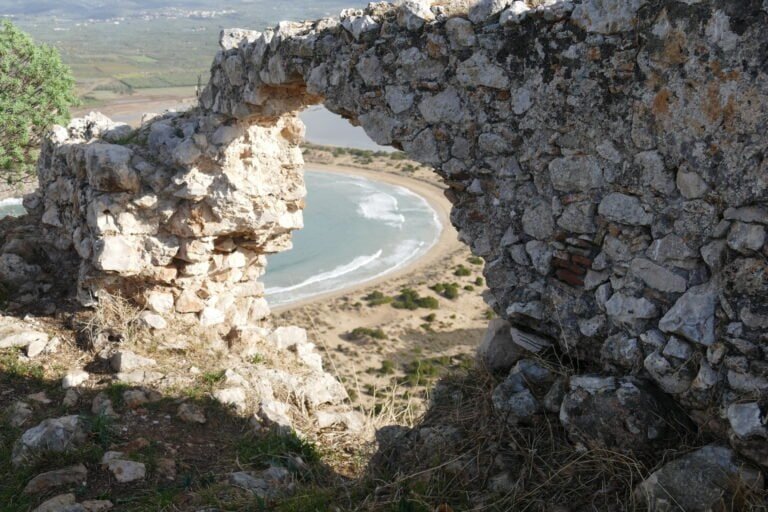
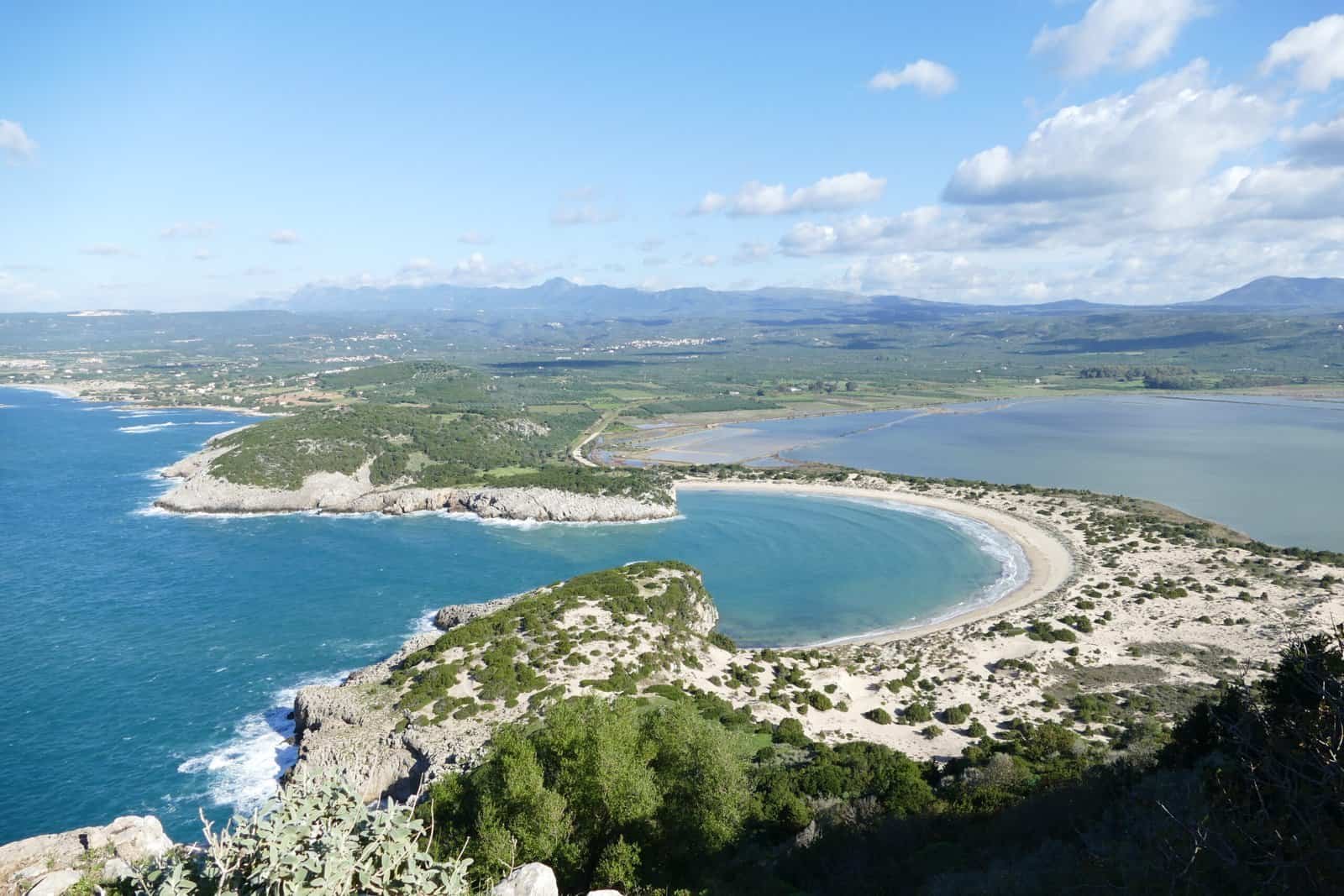
Paleokastro stands on a rocky ridge above the coast near Pylos in Messenia, overlooking Navarino Bay. From its elevated position, the fortress commands extensive views of the sea routes, coastline, and surrounding terrain. The site lies within a landscape where natural and cultural elements intersect: fortified architecture set against coastal ecosystems and historically significant waters.
The approach to Paleokastro passes through a protected ecological zone, reinforcing the close relationship between environmental and archaeological heritage. The fortress occupies a position that is both strategically dominant and visually exposed, making it an ideal case study for understanding defensive architecture in relation to terrain.
Why It Matters
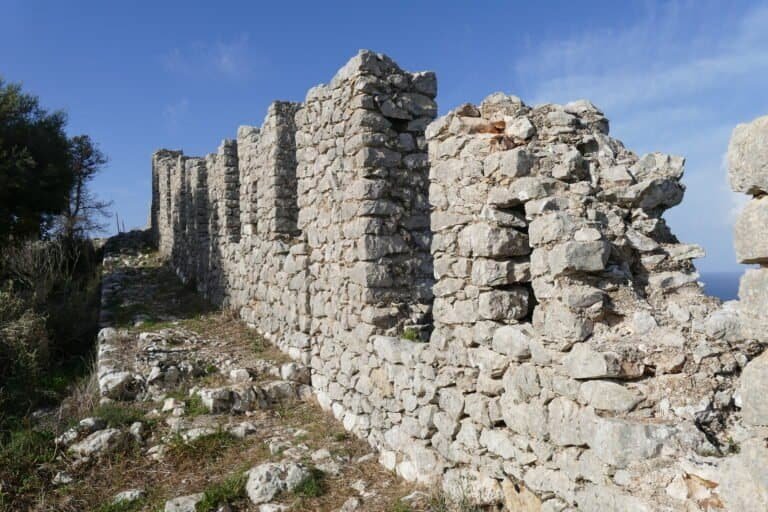
Historically, Paleokastro controlled movement along the coast and access to Navarino Bay. Its walls, entrance points, and surviving structural remains offer insight into regional defence systems and patterns of communication across the landscape.
For students and researchers, the site provides a clear example of how fortifications respond to topography, visibility, and lines of approach. The relationship between architecture and terrain is immediately legible: the fortress is not an isolated structure, but part of a broader defensive and maritime network.
Paleokastro therefore serves both as a historical monument and as a teaching landscape—an environment where architectural analysis, spatial observation, and contextual interpretation come together.
Current Challenges
Despite its importance, Paleokastro faces practical and structural challenges that affect both preservation and study:
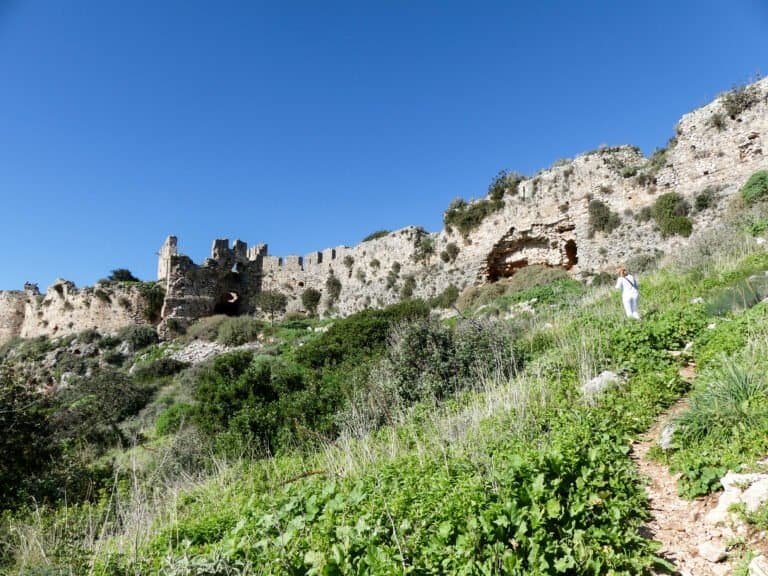
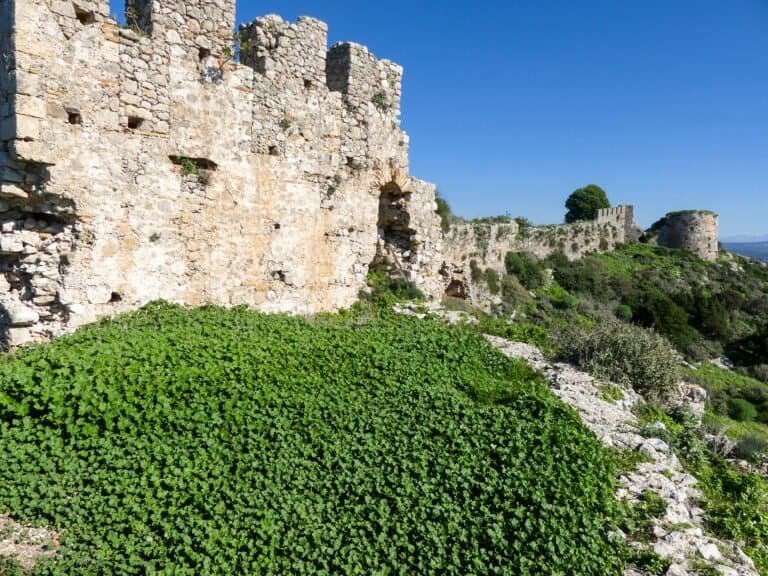
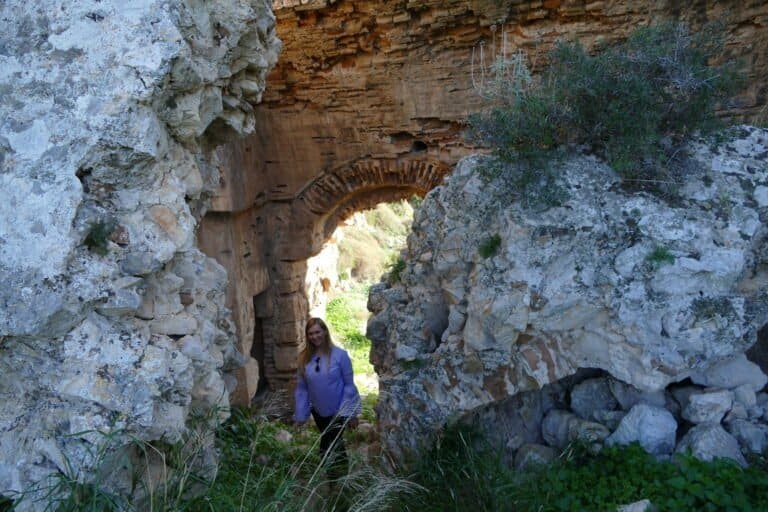
• Sections of the fortification walls are covered by dense vegetation.
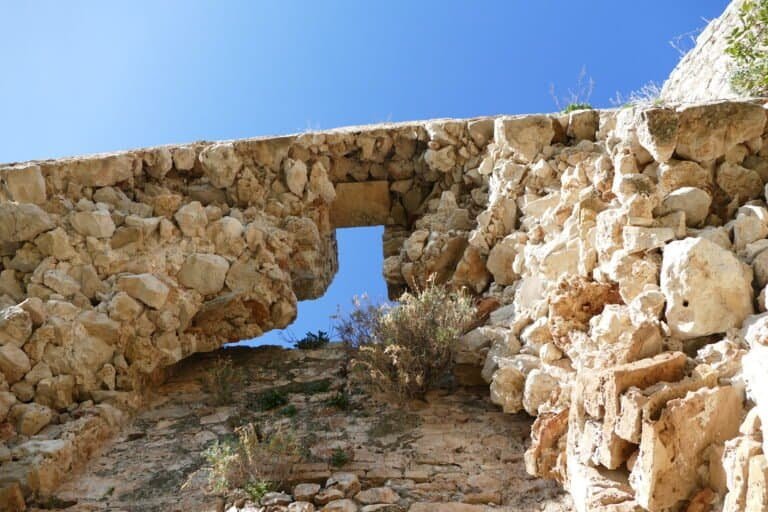
• Parts of the entrance area have partially collapsed.
• Architectural lines and structural details are increasingly difficult to read on the ground.
• Limited regular presence on site makes long-term monitoring more difficult.
Over time, these conditions risk diminishing not only the physical fabric of the fortress, but also our ability to understand and interpret it accurately.
What Adopt a Site Does Here
Through Adopt a Site, Paleokastro becomes part of a structured, recurring field framework. Under professional guidance, students and researchers:
• Walk and map the terrain to understand spatial relationships.
• Document visible structures through notes, sketches, and photographic recording.
• Identify areas where vegetation growth or structural stress is most evident.
• Support carefully supervised, small-scale conservation measures where appropriate.
The goal is not large-scale intervention, but continuity of attention. Regular, methodical documentation helps keep the site legible and its condition observable over time.
In this way, field learning becomes a form of stewardship—linking education directly to responsibility.
Become a Friend of Paleokastro
Support for Paleokastro helps maintain consistent presence on the hill and sustained documentation of its architectural remains.
By becoming a Friend of Paleokastro, you contribute to:
• Student fieldwork days and research visits.
• Basic materials and logistical support for safe site engagement.
• Ongoing monitoring and documentation of structural change.
Friends of the Site participate in a long-term commitment to keeping Paleokastro studied, understood, and responsibly engaged with—rather than left to gradual neglect.
If you would like to learn more about becoming a Friend of Paleokastro, we invite you to contact us for further information.