Field learning, maritime fortification and documentation in a living coastal landscape
Where It Is
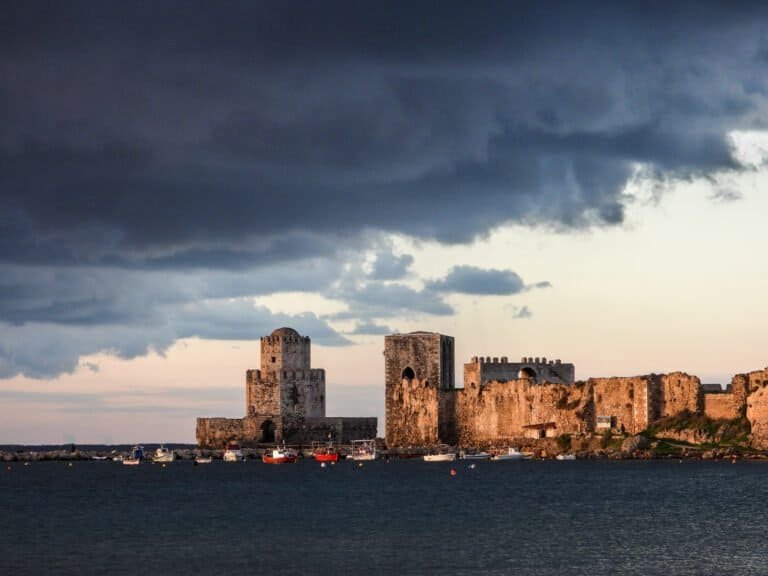
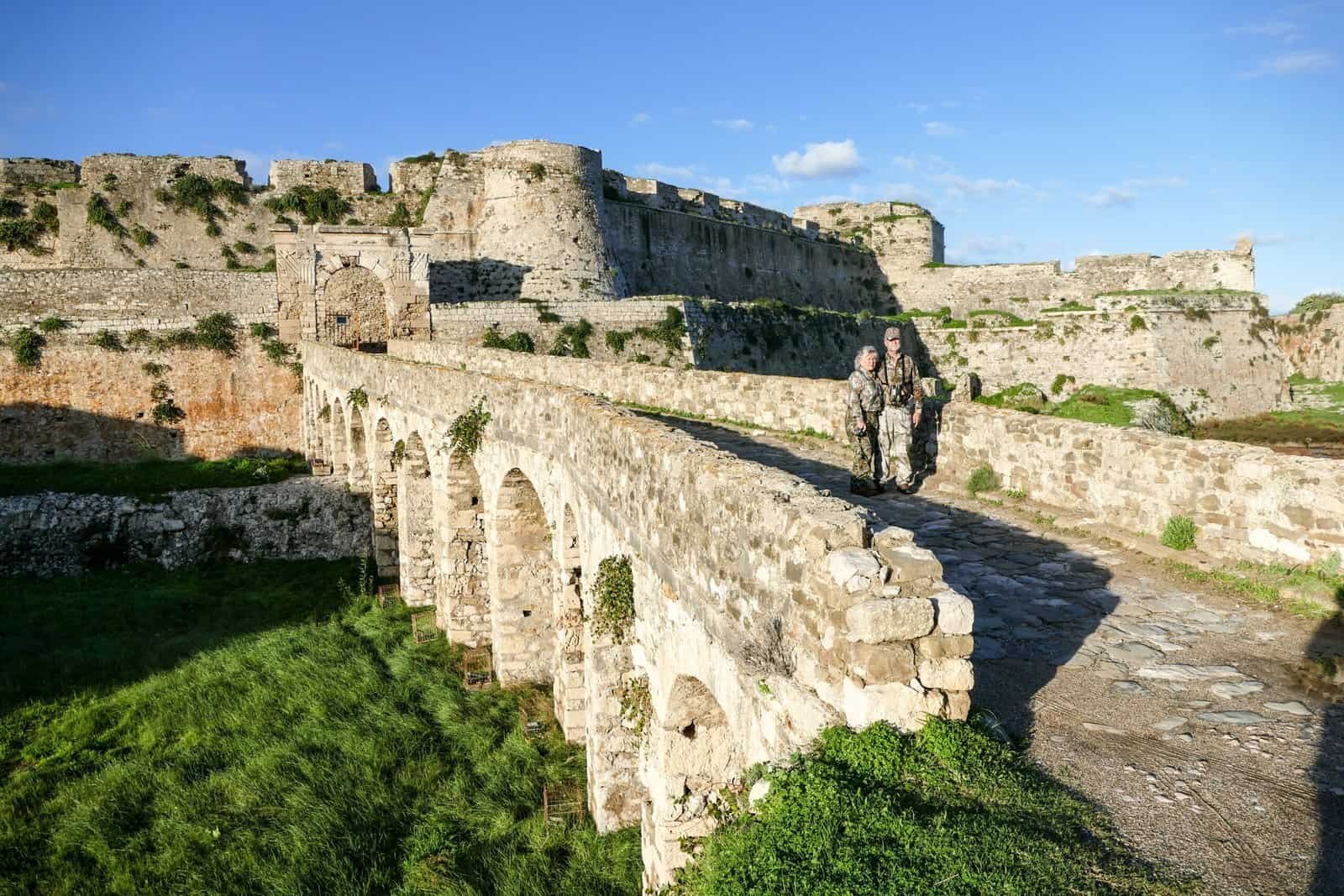
Methoni is a coastal fortress located on the southwestern edge of Messenia, projecting into the sea and historically controlling maritime movement along the Ionian routes. Its position at the edge of the shoreline makes it both architecturally impressive and strategically revealing.
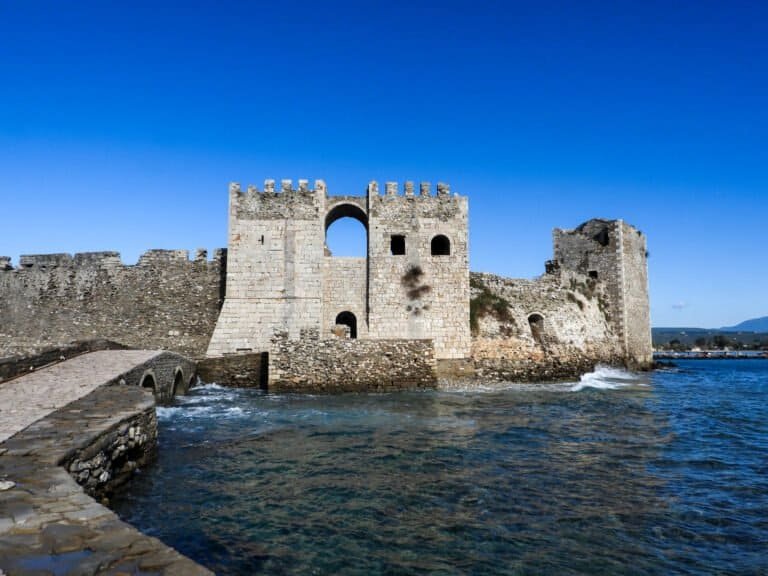
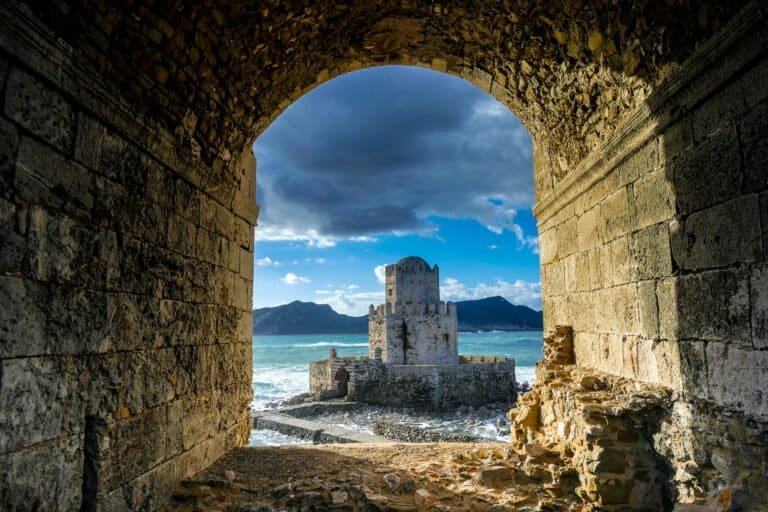
Unlike hilltop fortresses, Methoni stands at the meeting point of land and sea. Its sea gate, towers, and curtain walls speak to centuries of navigation, trade, defence, and shifting political control. The surrounding town and harbour remain active, reinforcing the site’s ongoing relationship with movement and access.
Why It Matters
Methoni offers a rare opportunity to study coastal fortification as part of a broader maritime system. Its architecture reflects not only defensive needs, but also commercial, administrative, and diplomatic functions.
For students and researchers, the site allows exploration of:
• The relationship between fortification and harbour infrastructure
• The adaptation of architecture to shoreline conditions
• The layered use of space across different historical periods
• The integration of military and civic functions within one structure
Methoni is not only a monument of stone — it is a record of coastal life and maritime exchange.
Current Challenges
Despite its visibility and historical importance, Methoni faces several challenges:
• Ongoing environmental stress from salt exposure and sea winds
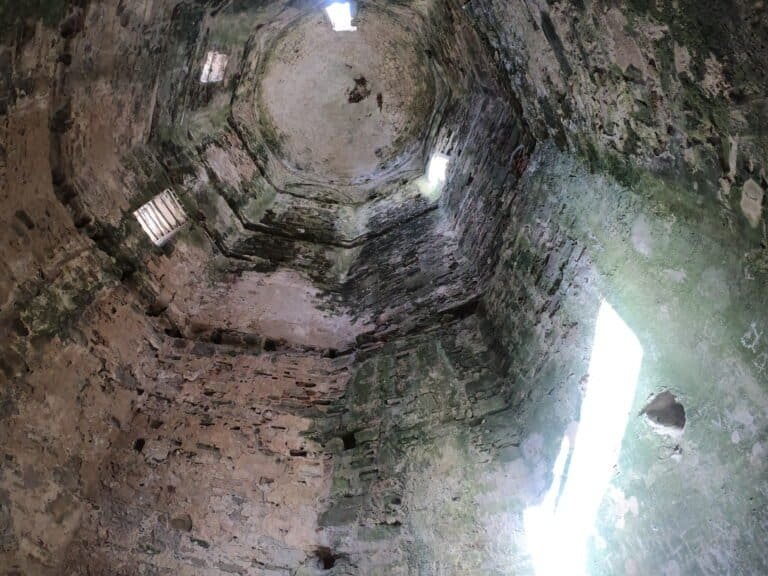
• Structural fatigue in selected wall sections
• Areas requiring clearer architectural documentation
• The need for updated educational interpretation materials
Like many coastal sites, Methoni is shaped continuously by natural forces, making regular monitoring and documentation essential.
What Adopt a Site Does Here
Through Adopt a Site, Methoni becomes part of a structured field-learning framework.
Students, researchers, and local partners work under professional supervision to:
• Document selected architectural elements
• Study the relationship between sea gate and defensive lines
• Record areas exposed to environmental stress
• Develop educational materials grounded in on-site observation
This work does not replace formal conservation projects — it complements them through sustained presence, documentation, and careful study.
Methoni becomes a teaching landscape where maritime history can be read directly from architecture and terrain.
How You Can Be a Friend of Methoni
You do not need to walk the fortress walls to contribute to its care.
By becoming a Friend of Methoni, you support:
• Student fieldwork days
• Research placements and guided documentation
• Basic materials for structured site recording
• Continued monitoring of vulnerable areas
Your contribution helps keep the work ongoing — quiet, careful, and consistent.
Friends of the Site choose to stand with a place shaped by wind, salt, and centuries of history.