
Responsibility Beneath the Surface
Underwater cultural heritage presents unique ethical challenges. Unlike terrestrial sites, submerged remains are often less visible, more vulnerable, and more susceptible to uncontrolled disturbance.
Within the Sapientza Maritime Landscape Project, documentation and digital reconstruction are guided by a clear ethical framework grounded in preservation, transparency, and respect for cultural heritage legislation.
The objective is not discovery for its own sake, but responsible understanding.
Non-Intrusive Documentation
Underwater survey methods employed in the project prioritise non-intrusive approaches.
Free-diving observation, underwater drone reconnaissance, and photogrammetric recording are used to document visible features without excavation, displacement, or extraction.
This approach ensures:
• Minimal environmental disturbance
• Preservation of site integrity
• Avoidance of irreversible intervention
• Compliance with heritage protection principles
Documentation does not imply ownership or entitlement.
Legal and Regulatory Awareness
Underwater archaeology in the Mediterranean is subject to national and international frameworks designed to protect submerged cultural heritage.
The project operates with awareness of:
• Cultural heritage protection legislation
• Maritime jurisdiction considerations
• Archaeological permitting processes
• Ethical obligations regarding data dissemination
Precise coordinates of sensitive locations are not publicly disclosed.
Responsible research includes responsible silence.
Data Protection and Controlled Access
Digital documentation introduces additional ethical dimensions.
High-resolution models, geospatial data, and underwater imagery can potentially expose fragile sites to risk if circulated without restriction.
For this reason:
• Raw spatial data is archived securely
• Sensitive site information is not publicly shared
• Public models are adapted to remove vulnerable detail where necessary
• Interpretative reconstructions are contextualised and documented
Digital transparency must coexist with protective discretion.
Reconstruction and Interpretative Honesty
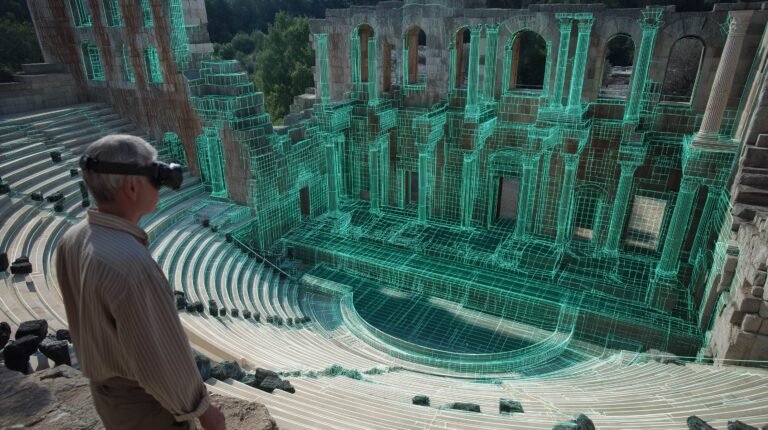
Digital reconstruction carries interpretative power. Visual models can strongly influence public perception of historical reality.
To avoid misrepresentation, the project distinguishes clearly between:
• Measured, documented data
• Hypothetical structural reconstruction
• Comparative inference
• Educational visualisation
Reconstruction is presented as a research hypothesis informed by evidence — not as definitive restoration.
Where uncertainty exists, it is acknowledged.
Avoiding Sensationalism
Maritime archaeology is frequently associated with narratives of treasure, piracy, and dramatic discovery.
While historical piracy and naval conflict form part of regional history, the project deliberately avoids sensational framing.
Submerged cultural heritage is treated as:
• Historical record
• Educational resource
• Environmental context
• Part of a broader cultural landscape
This approach preserves scholarly integrity while still engaging broader audiences through structured interpretation.
Ethics as Methodology
Ethical reflection is not an afterthought to research. It is part of methodology itself.
Decisions about:
• Where to document
• What to publish
• How to model
• How to visualise
• How to grant access
are embedded within the research process from the outset.
In underwater archaeology and digital reconstruction alike, stewardship extends beyond physical presence into the digital domain.
A Commitment to Responsible Heritage Practice
The Sapientza Maritime Landscape Project seeks to integrate field documentation, digital modelling, and public interpretation within a framework of care.
Archaeological landscapes — whether visible on land or submerged beneath the surface — demand continuity of responsibility.
Ethical practice ensures that research enhances understanding without compromising preservation.
As digital tools become increasingly powerful, ethical clarity becomes equally essential.